
Solid concrete blocks can arrive dangerously wet at a job site, and laying them while saturated directly compromises the load-bearing integrity of your masonry. When receiving deliveries from PrimeCrete, verifying moisture levels is an essential quality-control check before clearing solid concrete blocks for foundation and structural wall construction.
Excessive moisture on arrival generally traces back to one of two causes: surface saturation from hauling in wet weather, or “green block syndrome”-the premature dispatch of units from a casting yard before their mandatory 14- to 28-day hydration period has finished.
Yes, solid concrete blocks can be delivered too wet. Exceeding moisture limits set by ASTM C90 and PSQCA leads to drying shrinkage cracks, mortar joint dilution, and persistent efflorescence (shora). Fully cured blocks that got wet in transit require 48 to 72 hours of elevated, cross-ventilated drying, whereas uncured “green” blocks shipped under 14 days lack required compressive strength and must be rejected.
What Is the Difference Between Surface Rain Wetting and “Green” Blocks?
Determining whether delivered solid concrete blocks have exterior surface moisture or incomplete internal curing dictates whether a batch can be dried on-site or must be turned away:
Surface-Wetted Units (External Saturation)
These are fully cured blocks that satisfied their factory hydration cycle but were exposed to rain or road splash during flatbed transit. While surface pores are wet, the cement matrix has already developed its design strength. Once stacked and dried down to ambient moisture levels, their structural load capacity remains completely intact.
Green Blocks (Incompletely Cured Precast)
Green units are dispatched prematurely by suppliers trying to rush orders out the door. The cement paste has not completed the required curing process of precast concrete, trapping excess unreacted water inside the matrix. Installing green units locks in ongoing internal shrinkage that will crack finished masonry later.
Unlike core-ventilated hollow concrete blocks, which dry quickly due to their open cells and thin web walls, a solid block is a continuous mass of aggregate and cement with no internal airflow, causing deep moisture to remain trapped for days or weeks if not properly aired out.
What Happens If You Lay Wet Solid Concrete Blocks?
Placing saturated masonry units directly into wet mortar triggers three distinct structural and cosmetic issues:
1. Linear Drying Shrinkage and Stepped Wall Cracking
Concrete expands slightly when saturated and contracts as moisture evaporates. When wet blocks are locked into a rigid wall assembly, they shrink as they dry. This linear contraction produces internal tensile stresses that overcome the mortar’s bond strength, creating stepped diagonal cracks along joints or straight vertical fissures through block faces.
2. Mortar Bed Dilution and Joint Debonding
A wet block transfers free surface moisture directly into fresh cement-sand mortar. This spikes the local water-cement (w/c) ratio right at the contact interface, weakening joint compressive strength and compromising bond adhesion against lateral wind and seismic forces.
3. Chronic Efflorescence (Shora) and Salt Bloom
Trapped moisture leaches free calcium hydroxide [Ca(OH)2] and soluble mineral salts from aggregate pores. As this water wicks outward toward the plaster face, it reacts with carbon dioxide in the air to leave powdery white calcium carbonate crusts (shora). Managing this risk requires specific detailing, as outlined in our guide on efflorescence prevention on masonry walls.
Delivery Standards & Technical Moisture Limits
| Standard / Authority | Code Reference | Moisture & Material Requirement |
| ASTM International | ASTM C90 Standard Specifications | Restricts maximum moisture content as a percentage of total absorption at delivery, adjusted to local humidity tiers. |
| ASTM Testing Protocol | ASTM C140 Test Methods | Defines standard procedures for sampling, oven-dry weight calculations, moisture absorption rates, and compressive testing. |
| Pakistan Standards Body | Pakistan Standards and Quality Control Authority (PSQCA) | Establishes quality criteria for precast structural units to guarantee compressive ratings and limit capillary suction under local conditions. |
How to Test Concrete Block Moisture on Site
Site supervisors can use four quick diagnostic checks on flatbeds before signing delivery paperwork:
1. The Acoustic Clink Test
Gently strike two units together. Cured, dry blocks produce a clear, high-pitched metallic ring. Saturated or uncured green units emit a dull, muddy thud.
2. Visual Surface Color Gradient
A uniform light gray across edges and faces indicates thorough hydration and drying. Dark charcoal patches, wet rings, or localized sweating indicate high internal moisture.
3. Surface Scratch Resistance
Firmly scrape a block edge with the blade of a steel margin trowel. Properly cured concrete aggregate resists scratching cleanly; uncured green units shed sandy paste and crumble along the edge.
4. Non-Destructive Pinless Meter Check
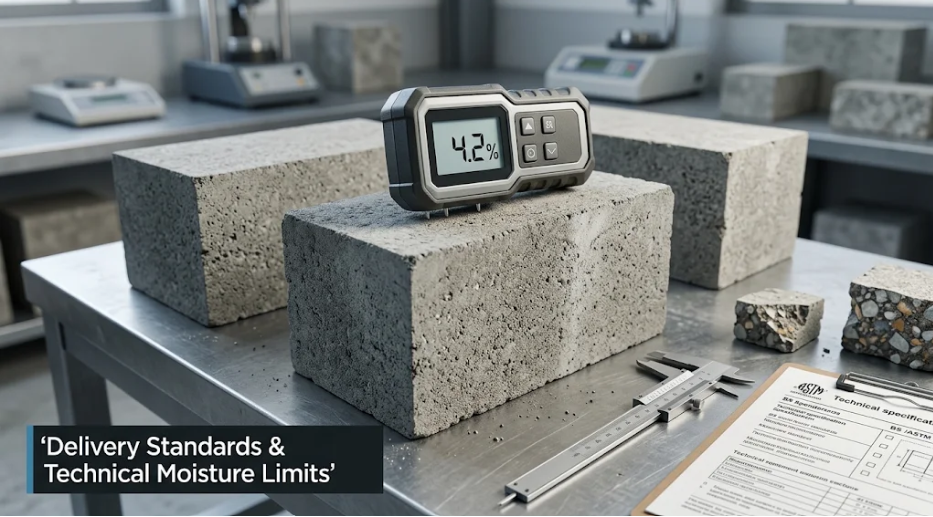
Place an RF concrete moisture meter flush against the block face to confirm whether moisture levels meet delivery target specs before staging the pallet.
These inspection principles apply uniformly across all precast product lines, including exterior paver blocks and insulating lightweight concrete blocks.
Recommended Site Handling and Drying Protocol
If blocks arrive wet solely from transit rain, do not lay them immediately. Follow this staging routine:
Elevate Off Bare Ground
Place pallets on wooden dunnage or precast skids at least 100 mm (4 inches) above the dirt to eliminate capillary suction from damp soil.
Arrange for Cross-Ventilation
Stack pallets in an offset checkerboard pattern with roughly two feet of clear corridor space between rows to maintain consistent cross-breezes.
Cover with Vented Tarpaulins
Tarp the top surface to block rain, but keep side skirts open so water vapor escapes freely rather than trapping humidity underneath. For complete site protocols, review our site storage and handling guidelines.
Frequently Asked Questions
Can you lay concrete blocks in the rain?
No. Laying blocks in active rainfall washes binder out of fresh mortar joints and saturates the blocks, leading to bond failure and post-construction shrinkage cracking.
How long do rain-soaked concrete blocks take to dry on site?
In warm, dry weather with good cross-ventilation, surface-wet units return to an acceptable equilibrium moisture content within 48 to 72 hours. Dense, tightly stacked units exposed to heavy rains may require up to a week.
Do you need to wet solid concrete blocks before laying?
No. Unlike traditional red clay bricks-which must be soaked to avoid pulling water out of mortar-precast solid concrete blocks should never be soaked before laying. They must be dry to only lightly damp on the contact face to prevent joint dilution.

[…] laying saturated blocks. PrimeCrete’s article on solid concrete blocks delivered too wet explains the importance of checking their condition before […]