

Good masonry starts before the first block is laid. Proper storage, careful handling, and correct curing protect hollow concrete blocks from cracks, chipped edges, excess moisture, contamination, and avoidable damage. These practices matter on construction sites in Pakistan, where heat, dust, monsoon rain, and uneven ground can quickly affect building materials.
Whether you are building a house in Islamabad, a commercial project in Rawalpindi, or an industrial structure in Haripur, simple site controls can reduce waste and improve wall quality. Here are six practical steps for contractors, supervisors, masons, and homeowners.
Why Proper Storage, Handling and Curing Matter
Hollow blocks provide a useful balance of strength, lower weight, thermal performance, and construction efficiency. But even a well-manufactured block can be damaged by poor site practices.
Blocks placed on wet soil may absorb moisture and dirt. Rough unloading can damage corners and faces. Incorrect stacking can create unsafe piles, while using blocks before they are properly cured may affect performance.
For projects still estimating quantities, PrimeCrete’s guide on calculating hollow concrete blocks for a 5 Marla house in Pakistan can help with planning before delivery.
1. Store Hollow Concrete Blocks on a Dry, Level Surface
Never place blocks directly on muddy, soft, or waterlogged ground. Prepare a firm, level storage area before the delivery truck arrives.
Use a Raised Base
Place blocks on timber battens, pallets, a concrete platform, or another stable raised surface. Keeping them above ground reduces contact with standing water, soil, and debris.
The area should have good drainage so rainwater cannot collect around the stacks. During Pakistan’s monsoon season, this helps limit unnecessary moisture exposure and keeps the work zone safer.
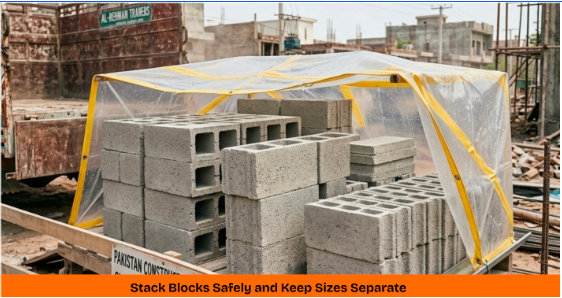
2. Stack Blocks Safely and Keep Sizes Separate
Blocks should be stacked in an organized way rather than dropped into random piles. Stable stacking reduces breakage and makes counting, inspection, and distribution easier.
Separate Different Block Types
Keep different sizes and grades in clearly identified stacks. Partition blocks should not be mixed with thicker wall units. If a project also uses Lightweight Concrete Masonry Units (CMUs), store them separately so workers choose the correct product.
Avoid excessively high or unstable stacks. The safe height depends on block size, pallet condition, ground stability, and site procedures. The key is preventing stacks from leaning, shifting, or becoming difficult to handle.
3. Protect Blocks from Rain, Mud and Contamination
Concrete masonry is durable, but poor storage conditions can still create problems. Protect blocks from heavy rain, mud splashes, chemicals, oils, and other contaminants.
Cover Without Trapping Moisture
Use a waterproof sheet or suitable cover when prolonged rain is expected, while allowing some air movement. Sealing damp blocks tightly under plastic can trap moisture.
Also keep blocks away from areas where plaster waste, soil, or heavy dust can collect on them. Cleaner surfaces support better mortar contact and neater wall finishes.
4. Handle and Unload Blocks Carefully
A hollow block can still develop chipped corners or cracked webs if it is thrown from a truck or dropped onto a hard surface.
Reduce Impact During Unloading
Unload blocks in controlled batches. Use forklifts or pallet equipment correctly where available. During manual handling, workers should lift and place blocks instead of throwing them.
Inspect the delivery while unloading. Separate visibly cracked or badly damaged units so they are not used accidentally in important wall sections.
Careful handling also reduces waste and replacement costs. If your project uses more than one masonry type, PrimeCrete’s guide to solid concrete blocks in Pakistan explains where denser units may be a better choice.
5. Allow Proper Curing Before Blocks Are Used
Curing allows cement-based products to gain strength and develop their intended properties. It is mainly a manufacturing responsibility, so blocks should reach the site after an appropriate production and curing process.
Do Not Use Fresh, Under-Cured Blocks
Do not rush newly produced blocks into wall construction. The supplier should use a controlled curing method suitable for the manufacturing process and product specification.
For load-bearing masonry, confirm that units meet the required engineering specification. ASTM C90 specification for dry-cast load-bearing concrete masonry units is one recognized reference, although project requirements, engineer instructions, and applicable Pakistani standards should also be followed.
6. Inspect Blocks Before Wall Construction Begins
A final inspection before installation can prevent small material problems from becoming larger wall defects.
Check Condition, Size and Cleanliness
Look for major cracks, broken corners, damaged webs, unusual surface defects, and heavy contamination. Blocks should also be reasonably uniform in size so masons can maintain consistent joints and alignment.
Some damaged units may still be suitable for approved cuts or non-critical uses, depending on site instructions. However, badly cracked blocks should not be placed in structural masonry simply to reduce waste.
Best Storage Practice for Hollow Concrete Blocks in Pakistan
For most projects, create a designated masonry storage zone before delivery. Keep it level, raised, well drained, easy to access, and protected from construction traffic.
This approach is useful on sites in Islamabad, Rawalpindi, Haripur, Peshawar, and other parts of Pakistan where materials may remain on site before installation. Clear labeling by size and intended use also reduces mistakes when several wall types are being built.
Frequently Asked Questions
Should Hollow Concrete Blocks Be Stored Outside?
Yes. They can be stored outdoors when placed on a firm raised base and protected from excessive rain, mud, and contamination. Good drainage is essential.
Can Hollow Blocks Be Used Immediately After Delivery?
Only when they have completed the required manufacturing and curing process and meet the project specification. If unsure, confirm with the supplier or project engineer.
Should Concrete Blocks Be Soaked Before Laying?
Do not automatically soak concrete blocks unless the project specification, manufacturer, or engineer requires a particular moisture-conditioning method.
What Commonly Damages Blocks on Site?
Rough unloading, dropping units, unstable stacking, vehicle impact, and storage on soft or wet ground are common causes.
Build Better Walls by Protecting Blocks Before Installation
Proper storage of hollow concrete blocks, careful handling of concrete blocks, and controlled curing of concrete masonry units support better construction quality. Keep blocks clean and protected, stack them safely, prevent impact damage, confirm curing and specification, and inspect units before use.
For builders and contractors in Pakistan, these practical steps can reduce waste, improve masonry consistency, and help every block perform as intended from the first course to the finished wall.
