
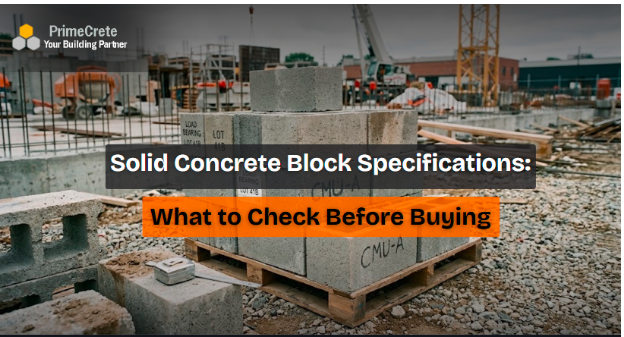
Buying blocks without checking their specifications is like buying a car without looking under the hood. The block might look fine on the surface, yet hide weak spots that show up only after your wall starts cracking. If you are building in Pakistan, a little inspection before you pay saves you from expensive repairs later. This guide walks you through every spec that matters, what good numbers look like, and the exact questions to ask your supplier before you place an order.
What Do Block Specifications Actually Mean?
Solid concrete block specifications are the measurable qualities that tell you how a block will perform in a real wall. They cover strength, size, density, water resistance, and the mix used to make each unit. Think of them as the block’s report card.
These numbers matter because two blocks can look identical yet behave very differently. One might carry a heavy roof for decades, while the other crumbles under moderate load. When you understand the specs, you stop judging blocks by looks alone and start choosing based on facts. That shift protects both your budget and your building.
Quality solid concrete blocks come with clear, testable figures. If a supplier cannot share any specs, treat that as your first warning sign.
Density: The Foundation of Strength
Density measures how much mass a block packs into its size. A denser block usually means better compaction, more cement, and greater strength. For solid blocks, higher density is almost always a good thing.
Why Density Matters
A dense block resists cracking, carries more load, and holds up against weather far better than a light, airy one. When you lift a quality solid block, it should feel heavy and firm for its size. If a block feels surprisingly light, the mix may lack cement or the maker may have skipped proper compaction. Either problem weakens the wall you build.
Water Absorption: Keeping Moisture Out
Water absorption tells you how much moisture a block soaks up. This spec matters a great deal in Pakistan, where monsoon rains and rising damp can quietly damage a structure.
The Ideal Range
Good blocks absorb less water, which helps them resist cracking, salt damage, and dampness inside walls. Lower absorption keeps your plaster and paint looking fresh for longer. When a block drinks up too much water, it swells, weakens, and passes moisture straight into your rooms. Ask your supplier for the water absorption figure and favor blocks with lower numbers, especially for exterior and boundary walls.
Dimensional Accuracy: Consistency You Can Build On
Dimensional accuracy means every block matches its stated size with little variation. It sounds minor, but it shapes your entire construction process.
How It Affects Your Build
Uniform blocks stack neatly, keep mortar joints even, and speed up laying. When sizes wander, masons waste time and mortar fixing gaps, and your wall count goes off. A few millimeters of difference adds up fast across a large wall. Before buying, measure a few sample blocks yourself and check that they all match the promised dimensions in inches. Consistent sizing is a quiet marker of careful manufacturing.
Surface Finish: What the Outside Reveals
The surface tells a story about what happens inside the block. A clean finish often points to a well-made unit, while flaws hint at trouble.
Signs of a Good Block
Look for a smooth, even surface with no visible cracks, chips, or crumbling edges. Sharp, well-formed corners show the block was cured and handled properly. Avoid blocks with honeycomb patches or rough, flaky faces, since these suggest poor mixing or weak compaction. A tidy surface also grips plaster better, giving you a stronger, cleaner final wall.
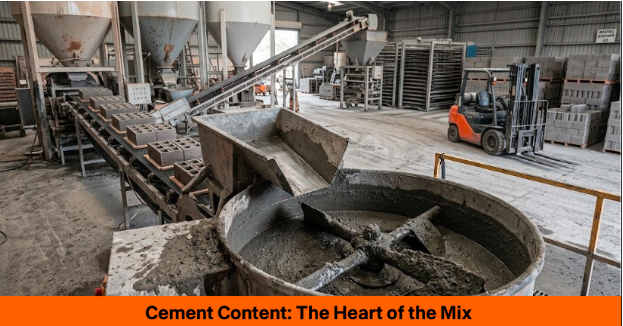
Cement Content: The Heart of the Mix
Cement binds everything together, so its share in the mix directly shapes strength and durability. Too little cement, and the block falls apart under pressure.
Getting the Ratio Right
A proper cement-to-aggregate ratio gives you reliable, repeatable strength. Cutting cement is a common way some makers lower cost, but it comes at the price of a weaker block. You cannot always see cement content with your eyes, so ask the supplier about their mix and check it against the block’s strength results. Blocks with the right cement content feel solid, sound dense when tapped, and pass strength tests with room to spare. Our guide on spotting quality building materials breaks down these mix details further.
Compressive Strength: The Number That Matters Most
Compressive strength measures how much pressure a block can take before it cracks. For structural work, this is the single most important spec to check.
What to Aim For
Strength is measured in megapascals (MPa) or pounds per square inch (psi). For most residential projects in Pakistan, blocks rated between 5 and 7 MPa work well. Tall boundary walls, multi-story homes, and heavy load-bearing walls may call for higher grades.
Never take a strength claim on trust alone. Ask for lab test results and compare them against the standards published by the Pakistan Standards and Quality Control Authority. Reliable manufacturers test their blocks regularly and share the data without hesitation.
How to Verify Specifications Before You Buy
Knowing the specs is one thing. Confirming them is what keeps your project safe. A few simple checks separate genuine quality from empty promises.
Practical Verification Steps
- Request test reports: Ask for recent compressive strength and water absorption results.
- Inspect real samples: Never judge from photos. Handle actual blocks for weight, finish, and shape.
- Measure dimensions yourself: Confirm the size in inches matches what was promised.
- Do a weight check: A block that feels too light for its size often hides poor quality.
- Tap test the block: A solid, dense block gives a sharp ring, while a weak one sounds dull.
These quick steps take minutes but can save you from ordering a full batch of poor blocks.
What to Ask Your Supplier Before Buying
Your supplier’s answers reveal as much as the blocks themselves. Straight, confident replies point to a maker who stands behind their product.
Key Questions to Raise
- What is the compressive strength grade, and can I see the test data?
- What are the exact dimensions and the water absorption rate?
- What cement-to-aggregate ratio do you use?
- Can I inspect samples before committing to a full order?
- Do your blocks meet national quality standards?
A trustworthy supplier welcomes these questions. If someone dodges them or has no data, keep looking. You can compare full details across the range of block options and read more buying advice on our construction blog.
Final Checks Before You Order
Checking specifications turns a risky purchase into a smart, confident one. Keep these points front of mind:
- Favor high density and a heavy, firm feel.
- Choose low water absorption, especially for exterior walls.
- Confirm uniform dimensions and a clean surface finish.
- Verify compressive strength of 5–7 MPa for homes, higher for heavy loads.
- Ask for test data and inspect real samples every time.
When you match the right specs to your project and buy from a supplier who shares honest data, every block you lay adds real strength to your build. Take the extra hour to inspect before you pay, and your walls will reward you for generations.

[…] For more insight into evaluating factory-produced concrete products, read PrimeCrete’s guide to Solid Concrete Block Specifications: What to Check Before Buying. […]
[…] The Concrete Masonry & Hardscapes Association (CMHA) publishes a clear breakdown of these requirements. For a buyer’s checklist, read our guide on solid concrete block specifications and what to check before buying. […]