
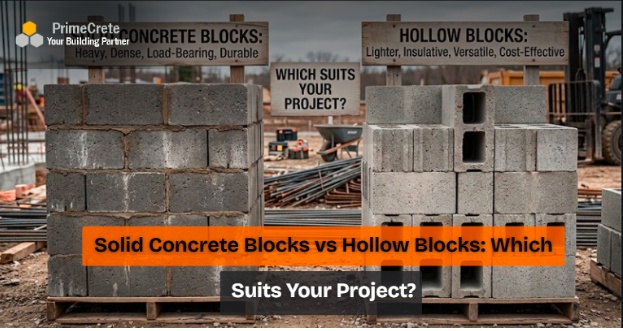
Choosing between block types is one of the first big decisions in any build. Both options build strong walls, yet they behave very differently once weight, budget, and climate come into play. This guide breaks down what each block is, how they compare, and which one fits your project best in Pakistan.
What Are Solid Concrete Blocks?
Solid concrete blocks are dense, gap-free building units made from cement, sand, crushed stone, and water. Because they have no hollow cavities inside, they pack more mass into the same shape. That extra density gives them serious strength, so builders trust them for jobs where pressure and durability matter most.
These blocks resist fire, moisture, and pests well, and they hold up against hot summers and heavy monsoon rain. You will often see solid concrete blocks used in foundations, load-bearing walls, retaining walls, and tall boundary walls across the country.
What Are Hollow Concrete Blocks?
Hollow concrete blocks use the same core materials, but they contain open cavities in the middle. These gaps usually make up around a quarter to half of the block’s volume. The result is a lighter unit that still offers respectable strength for non-structural work.
The hollow spaces do more than cut weight. They trap air, which improves insulation, and they leave room to run pipes, wiring, or steel reinforcement through the wall. For many everyday projects, that flexibility makes them an attractive, budget-friendly choice.
Key Differences Between Solid and Hollow Blocks
Understanding how the two compare helps you match the right block to the right wall. The differences come down to four main areas: strength, weight, cost, and insulation.
Strength
Density drives strength, and this is where solid blocks pull ahead. With no gaps inside, they carry far more load before they crack. Their compressive strength makes them the safer pick for anything that must bear weight.
Hollow blocks still perform well for non-load-bearing walls, but they cannot match a solid unit under heavy pressure. If your wall supports a roof, floor, or upper story, strength should top your list of concerns.
Weight
Weight affects transport, labor, and how much strain a wall places on its foundation. Solid concrete blocks are noticeably heavier, which reflects their density but also raises handling effort. Hollow blocks are lighter and easier to lift, so masons can lay them faster and with less fatigue. For high walls or upper floors, that reduced load can be a real advantage.
Cost
Budget shapes most construction decisions. Hollow blocks generally cost less per unit because they use less material. They also cover a wide area quickly, which trims labor and mortar costs.
Solid blocks cost more upfront, yet they can pay off where strength prevents future repairs. Weighing price against long-term performance keeps your spending smart. Our guide on material budgeting for construction explains how to balance these trade-offs.
Insulation
The air pockets inside hollow concrete blocks slow the flow of heat and sound. That makes them a strong choice for keeping rooms cooler in summer and quieter overall. Solid blocks offer better sound blocking thanks to their mass, but they transfer heat more readily. In hot regions, this difference can influence both comfort and cooling bills.
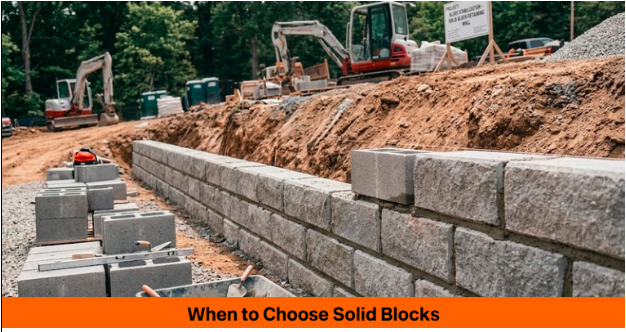
When to Choose Solid Blocks
Some jobs simply demand the strength only a dense block can provide. Reach for solid concrete blocks when your project involves:
- Load-bearing walls in homes and commercial buildings
- Foundations and basement walls
- Retaining walls that hold back soil
- Tall boundary walls that face wind and impact
- Areas exposed to constant moisture
In these cases, the added weight and cost are worth it. A dense block resists cracking, shifting, and weather far better, so your structure stays stable for decades. Always confirm the grade with your supplier and check the test data against the standards published by the Pakistan Standards and Quality Control Authority before you build.
When to Choose Hollow Blocks
Hollow blocks shine when strength is not the top priority and speed, budget, or insulation take the lead. They suit:
- Non-load-bearing partition walls
- Interior dividers between rooms
- Walls that need pipes or wiring routed through them
- Projects where lighter weight eases the load on foundations
- Buildings that benefit from better thermal insulation
Because they are lighter and cheaper, hollow blocks help you cover large areas quickly without straining your budget. Just avoid using them where heavy loads or strong impact are expected.
Solid vs Hollow Blocks in Pakistan’s Construction Context
Local conditions play a big role in this choice. Our climate swings between fierce summer heat and heavy monsoon rain, so both durability and insulation deserve attention.
Matching Blocks to Local Needs
For boundary walls, foundations, and multi-story frames, most builders here lean on solid blocks for their raw strength and weather resistance. These structures face real pressure, and a dense block gives lasting peace of mind.
For internal partitions and single-story homes on a tight budget, hollow blocks often make more sense. Their lower cost and cooler performance suit the many projects where walls divide space rather than carry heavy loads.
A Practical Mixed Approach
Many smart builds use both. You might frame load-bearing and boundary walls with solid concrete blocks while using hollow units for interior partitions. This mix balances strength, comfort, and cost across a single project. To compare full specifications side by side, explore the range of block options and review the detailed breakdowns on our construction blog.
Making the Right Choice for Your Project
The best block depends entirely on the job in front of you. Solid blocks deliver unmatched strength for foundations, load-bearing walls, and tall boundaries, while hollow blocks offer lighter weight, lower cost, and better insulation for partitions and non-structural work. Start by asking what your wall must do, then weigh strength against budget and climate. When you match the block to its true purpose and buy from a trusted supplier, every wall you raise stands on genuinely solid ground.
