
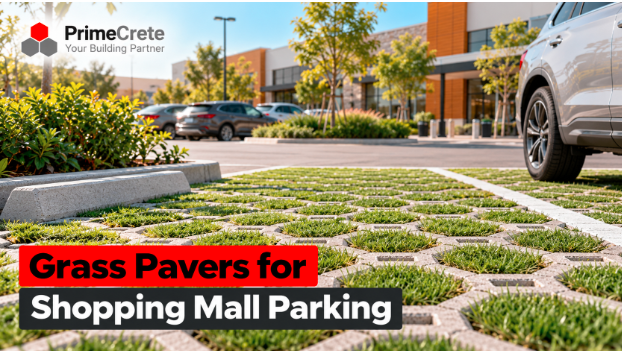
A shopping mall car park in July can feel like a frying pan in daylight and a lake after a monsoon downpour. Developers in Islamabad, Lahore and Karachi increasingly ask whether grass pavers can solve both problems at once: less heat, less runoff, and a greener frontage. The honest answer is yes, but only in the right parts of the car park.
At PrimeCrete, we manufacture concrete grass pavers for parking areas, driveways and landscaped public spaces, alongside interlocking pavers and kerb stones. This guide explains where grass pavers work in a shopping mall car park, where they do not, and how to design and maintain them for Pakistan’s climate.
The Short Answer
Grass pavers suit shopping mall parking best in low-turnover zones: overflow and event parking, staff bays, peripheral rows, emergency access lanes and landscaped buffers. They are generally a poor choice for main entrances, busy drive aisles, drop-off points and high-turnover bays near the doors. Most successful mall car parks combine solid interlocking pavers in traffic lanes with grass pavers in selected parking stalls.
What Are Grass Pavers?
A grass paver is a precast concrete grid unit with open cells that are filled with soil and grass, or with gravel. The concrete ribs carry wheel loads, while the open cells let rainwater soak into the ground instead of running off the surface.
The US Environmental Protection Agency’s stormwater fact sheet on permeable pavements describes concrete grid pavements as more typical in areas with intermittent traffic, such as overflow parking and emergency fire lanes. That one point should shape the entire layout of a mall car park.
Where Grass Pavers Work in a Mall Car Park
| Car park zone | Traffic pattern | Grass pavers? |
| Overflow / Eid and sale-season parking | Occasional, seasonal | Excellent fit |
| Staff parking | Parked all day, low turnover | Good fit |
| Peripheral rows far from entrances | Light, mostly weekend use | Good fit |
| Emergency and fire access lanes | Rare but heavy | Good fit if designed for the vehicle load |
| Landscaped islands and buffers | Occasional overrun | Good fit |
| Bays next to entrances | Constant turnover and turning | Use solid pavers |
| Main drive aisles and ramps | Continuous moving traffic | Use solid pavers |
| Drop-off, taxi and ride-hailing zones | Frequent stopping and turning | Use solid pavers |
| Accessible (disabled) bays and walkways | Wheelchairs, trolleys, prams | Use a smooth, solid surface |
Local US stormwater manuals reach the same conclusion. Greenville County’s pervious pavement specification states that concrete grid pavers are intended for very limited vehicular traffic and are not recommended for regularly used parking areas.
Why Turnover Matters
Every car arriving and leaving turns its wheels on the surface. In a busy bay near the main doors, that can mean dozens of turning movements per day. Grass in the cells gets crushed, roots die, and the cells turn into dust in summer and mud in the monsoon. In a staff bay where one car parks at 9 am and leaves at 6 pm, grass has a real chance to survive.
Benefits for Shopping Malls in Pakistan
- Monsoon runoff control: Rain infiltrates through the cells, reducing ponding and load on storm drains.
- Cooler surfaces: Vegetated cells stay cooler than large expanses of hard paving in summer sun.
- Greener frontage: Softens large car parks visually without giving up parking spaces.
- Flexible overflow capacity: Lawn-like areas can carry cars during Eid, sales and events.
- Durable structure: Concrete ribs carry wheel loads when the base is designed correctly.
Design Essentials Before You Specify
Base and Sub-Base
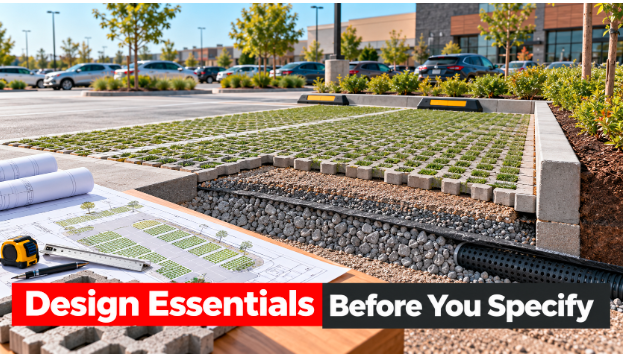
Grass pavers still need a properly designed, compacted sub-base sized for the soil and expected vehicles. The base must carry load and still drain freely. A grass paver laid straight on loose soil will rut, tilt and settle unevenly within one season.
Edge Restraint
Contain grass paver areas with concrete kerbs or edging, especially where they meet solid paving. This stops units drifting under turning wheels.
Cell Fill: Grass or Gravel?
Grass needs sunlight, irrigation and recovery time. Under shade structures, in water-scarce areas or in zones with heavier use, gravel-filled cells keep the permeability benefit without the maintenance burden. Many Pakistani projects use grass at the perimeter and gravel in busier stalls.
Bay Marking
Paint does not stick to grass. Use contrasting solid paver strips or concrete markers to define bays and keep parking orderly.
Pedestrian Routes
Shoppers push trolleys, wear varied footwear and walk with children. Provide continuous solid walkways from every grass paver zone to the entrance. Our complete buying guide to grass pavers in Pakistan covers unit selection in more detail.
Maintaining Grass Pavers in a Mall Setting
- Irrigate during establishment and dry months, using the lowest practical water demand
- Mow regularly so grass does not overgrow the ribs
- Top up soil or gravel in cells after the first months of settlement
- Clear litter and leaves from cells before the monsoon
- Rotate overflow areas where possible so grass can recover
- Clean oil drips promptly in fixed staff bays
Worried about mud? Our guide on whether grass pavers get muddy explains how installation keeps the surface stable.
Frequently Asked Questions
Can grass pavers handle cars every day?
They can carry the weight of cars, but grass struggles under constant daily turnover. Use them where cars park for long periods or only occasionally.
Can fire trucks use grass paver lanes?
Grass paver fire lanes are common, but the sub-base and units must be designed for the heaviest emergency vehicle. Confirm requirements with the project engineer and the relevant authority.
Will grass survive Pakistan’s summer heat?
It can, with a suitable heat- and drought-tolerant grass, adequate irrigation and limited traffic. Where water or sunlight is limited, gravel fill is a practical alternative.
Are grass pavers more expensive to maintain than solid paving?
Grass-filled cells need mowing, irrigation and periodic top-ups. Gravel-filled cells need much less. Factor maintenance into the decision, not only installation cost.
Conclusion
Grass pavers can make a shopping mall car park greener, cooler and better at handling monsoon rain, provided they go into the right zones. Use them for overflow, staff, peripheral and emergency areas, and keep solid paving for entrances, aisles and high-turnover bays. Pair that zoning with a sound base, firm edges and a realistic maintenance plan.
PrimeCrete can help mall developers, architects and contractors plan the right mix of grass pavers, interlocking pavers and kerb stones for commercial parking projects across Pakistan.
