

Every monsoon, the same scene plays out across Pakistan. The sky opens, the driveway turns into a swimming pool, and the street drain gives up before the second cup of chai. Concrete everywhere, and nowhere for the water to go.
That’s exactly why more homeowners, architects and developers now ask about green surfaces. At Prime Crete, one question pops up more than most: are grass pavers actually good for the environment, or is it just green paint on a marketing brochure?
Short answer: yes, they are, with a few honest conditions. This guide walks through what the research says, where grass pavers shine, where they struggle, and how to get real environmental value from them.
What Are Grass Pavers?
Grass pavers are open-cell blocks laid in a grid. You fill the gaps with soil and grass, or with gravel. The solid part carries cars and feet. The open part lets rain and roots through.
Think of them as a peace deal between your lawn and your car. The car gets a firm surface. The lawn gets to keep breathing.
Engineers group them under permeable paving, a family of surfaces that let water soak in instead of rushing off. Other members include previous concrete, porous asphalt and permeable interlocking pavers.
How Grass Pavers Help the Environment
Here’s where the green credentials stop being a slogan and start being science. Five benefits stand out.
1. They Cut Stormwater Runoff
A normal concrete driveway acts like a slide. Rain hits it and races straight to the drain, carrying everything with it.
Grass pavers break that slide. Water drops into the cells, sinks through the soil and moves into the ground below. Less water on the surface means less pressure on overloaded street drains during heavy rain.
2. They Recharge Groundwater
Water that soaks in doesn’t vanish. It feeds the soil and, over time, the groundwater beneath it. The US Environmental Protection Agency notes that permeable surfaces, unlike asphalt or concrete, let stormwater infiltrate into soil and groundwater (EPA).
For water-stressed cities, that matters. Every square metre of sealed concrete is a square metre where rain can’t refill the ground.
3. They Help Filter Pollutants
Runoff from driveways and parking lots picks up oil, dust and grime. When that water passes through soil and grass roots instead, some of those pollutants get trapped before they reach drains and streams.
The EPA lists reduced runoff and filtered pollutants among the main benefits of permeable pavements (EPA).
4. They Keep Surfaces Cooler
Anyone who has walked barefoot on a Lahore rooftop in June knows hard surfaces cook. The EPA cites an Arizona pilot study where conventional asphalt reached surface temperatures of up to 152°F (about 67°C) at mid-day.
The same EPA page names grass paving as one approach to “cool pavements”. Grass releases moisture through evaporation, and that keeps the surface far friendlier than bare concrete. Your feet, and your car’s tyres, will thank you.
5. The Experts Use Them Too
This one is less a benefit and more a vote of confidence. The EPA’s own facilities include grid pavers alongside pervious concrete and porous asphalt in parking lots, driveways and sidewalks. When the environmental regulator picks a product for its own car park, that says something.
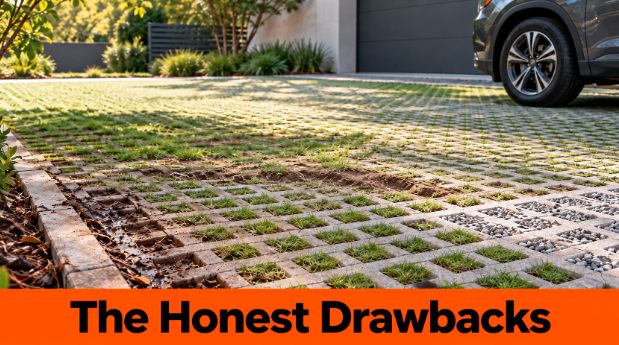
The Honest Drawbacks
No product saves the planet on its own, and grass pavers are no exception. A fair review needs the fine print too.
Installation Makes or Breaks Them
Lay grass pavers on poorly prepared ground and you’ll get ruts, puddles and a lot of regret. The base layers need proper grading and compaction so water drains and the blocks stay level. We covered this in detail in Do Grass Pavers Get Muddy?
Grass Needs Some Care
Grass is alive, so it needs sunlight and occasional watering. In deep shade or under cars parked 24/7, it may thin out. Many owners fill those spots with gravel instead, which still lets water through.
Concrete Has a Carbon Cost
Cement production releases carbon dioxide, and that’s a fact every concrete maker should admit. Grass pavers use less concrete per square metre than a solid slab because of their open cells. A long service life also spreads that footprint over many years.
Concrete vs Plastic Grass Pavers: Which Is Greener?
You’ll find grass pavers in two main materials. Each has a case, but they suit different jobs.
| Factor | Concrete grass pavers | Plastic grass grids |
| Load capacity | Handles regular car traffic | Mostly lighter loads |
| Lifespan | Long-lasting, resists sun and heat | Can turn brittle under strong UV |
| End of life | Inert material, can be crushed and reused as aggregate | Adds to plastic waste if not recycled |
| Look | Visible concrete grid with grass | Grid mostly hidden under grass |
For Pakistan’s summer sun and monsoon loads, concrete grass pavers usually make more sense. A product that lasts longer means fewer replacements, and fewer replacements mean less waste.
Where Grass Pavers Work Best
Grass pavers shine where traffic is regular but not brutal. Good spots include:
- Home driveways and car porches
- Overflow and visitor parking
- Park paths, walkways and garden edges
- Fire lanes and emergency access routes
- Green public spaces and campuses
For heavy, constant truck traffic, solid interlocking paver blocks remain the safer pick. Many smart designs mix both: interlocking pavers for the driving lane, grass pavers for the parking bays.
Simple Maintenance Tips
- Edge it properly. Strong kerb stone blocks stop the pavers from creeping sideways.
- Mow and water like any lawn, just a little more gently.
- Top up the soil in cells that sink over time.
- Keep sediment out. Mud washing in from bare soil nearby can clog the surface.
Planning a project? Our Grass Pavers in Pakistan: Complete Buying Guide covers sizes, choices and buying tips.
Frequently Asked Questions
Are grass pavers better for the environment than concrete?
Yes, for most driveways and parking areas. They let rain soak into the ground, reduce runoff and stay cooler than a solid slab. A solid slab does none of that.
Do grass pavers reduce flooding?
They help at the source. Each paved area that absorbs rain sends less water to street drains. They won’t fix a city’s drainage alone, but they reduce your property’s share of the problem.
Can cars park on grass pavers?
Yes. Concrete grass pavers carry regular car traffic when installed on a properly compacted base.
Do grass pavers need a lot of water?
No more than a normal lawn. In dry months, light watering keeps the grass healthy. Gravel-filled cells need none at all.
The Verdict: Green in More Ways Than One
So, are grass pavers environmentally friendly? The evidence says yes. They cut runoff, recharge groundwater, filter pollutants and keep surfaces cooler, and the EPA backs each of those points.
The catch is simple: install them well and look after the grass. Do that, and you get a driveway that handles both your car and the monsoon. No floating slippers required.
Ready to go green? Explore Prime Crete’s eco-friendly grass pavers or contact our team for advice on your project.
